Is your Affiliate Network Making your Marketing Riskier?
Court finds “maker” community influencer and affiliate posts may support false advertising claims when brand relationships and compensation are in play.
Once “fans of the brand” receive value from a company, even indirectly, legal risk management gets more complicated.
How a Patent Fight Turned into an Advertising Case
A recent patent case in the Middle District of Florida underscores some of the potential risks brands take on when they elect to “outsource” marketing to online influencers and affiliate programs. The advertising claims of interest arose as counterclaims to a patent infringement case brought by LensDigital (LD) relating to rotary laser engraving devices, often used to engrave cylindrical objects.
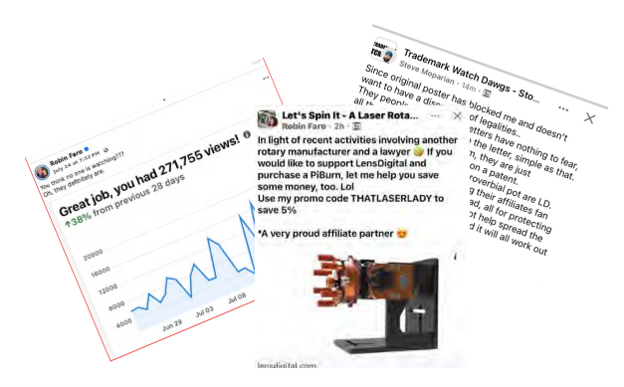
Defendants in the original matter, JER Custom Designs, Inc. and its owner, Jason Earl Rife (JER), counterclaimed that LD was liable for false advertising stemming from social media posts of online affiliate influencers working with LD. Online “affiliates” are a species of influencer that receive a commission on sales of reviewed or featured products when their audience links to an e-commerce site and makes a purchase.
JER alleges that LD’s network of “affiliate influencers” includes members of the “maker” community – a movement of individuals that collaborate using digital fabrication and tools to build products – and these affiliates receive compensation for promotion and sale of LD’s products. JER says these affiliates posted on social media, falsely accusing JER of stealing LD’s intellectual property (IP) allegedly to boost affiliate sales of LD products. JER also took issue with the fact that LD’s influencers allegedly failed to consistently or properly disclose their relationship to LD.
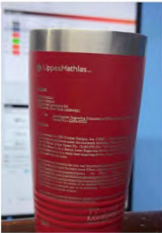
Counsel for JER wrote to a number of these influencers notifying them of JER’s allegedly senior patent rights, prompting those influencers to criticize JER’s positions on social media, one influencer even going so far as to accompany its post with a photo of a tumbler engraved with the letter from JER’s counsel.
Personal Posts, Commercial Consequences
LD moved the court to dismiss these claims, arguing in part, that the affiliate statements were not “commercial in nature” as they were made only on personal Facebook pages and all but one statement did not direct any consumer to purchase or refrain from purchasing any particular product. The court was unpersuaded and found that JER had pleaded sufficient facts to plausibly establish that the affiliates’ disparagement of JER was sufficient to nudge consumers to purchase the LD alternative products, thereby establishing that the statements advanced LD’s business interests and could constitute commercial speech.
In false advertising matters, the Eleventh Circuit also requires that a defendant be in commercial competition with the plaintiff as an element of commerciality. The district court here found that allegations that the affiliates profited from their promotion of LD products were sufficient to cause the court to decline to dismiss the claims at this stage.
The Broader Lesson for Advertisers
We have seen numerous cases where advertisers are found to be liable for the acts of their influencer and affiliate networks. Several high-profile cases have involved copyright liability of advertisers when influencers use improperly licensed music in their content. Other cases center on influencers and affiliates that fail to properly disclose their relationship to the advertiser in accordance with the FTC Endorsement Guides. Advertisers should also consider whether their affiliate or influencer program increases the risk of those influencers making false or unsupported advertising claims or competitive statements that could give rise to claims of trade defamation or tortious interference with business relationships.
Once a link exists between advertiser spending and influencer or affiliate content —through commissions, free products, special access or other value — advertisers may face greater risk from what those influencers say online. To reduce that risk, brands should evaluate influencer and affiliate programs — whether through direct engagement or platforms or networks — for:
- Clear enrollment and qualification standards for influencers, affiliates and creators;
- Disclosure requirements consistent with the FTC Endorsement Guides;
- Brand and claims guidelines covering product claims, competitive statements, substantiation, drug claims, third-party IP and other brand safety issues;
- Content review and approval rights corresponding to campaign risk levels;
- Monitoring and audit procedures; and
- Correction, takedown and termination rights when influencer content creates legal or reputational risk.
The case is LensDigital, LLC v. Rife, No. 3:24-cv-798-RKE-LLL (M.D. Fla.).